Health is not created in isolation. It never has been.
Despite extraordinary scientific advances, much of modern healthcare education still treats the human body as if it exists apart from the social world that shapes it. Organs are studied in segments. Systems are analyzed in controlled, laboratory-like conditions. By forcing community-based work to operate like an isolated laboratory, current structures strip interventions of the organic, relational dynamics that actually drive healing, leading to findings that are either overcontrolled or disconnected from the outcomes people experience in real life.
While this approach has produced life-saving discoveries, it has also created blind spots—especially when it comes to understanding why health outcomes differ so dramatically across populations.
Health is a social construct. Every organ in the human body is influenced by social, environmental, emotional, and relational conditions. When medical education overlooks this reality, it unintentionally trains future clinicians to treat symptoms while missing the systems that produce them.
The Body Does Not Live in a Laboratory
Understanding anatomy, physiology, pathology, and pharmacology is essential. No serious argument disputes that. Research clearly shows, for example, that iron deficiency can contribute to fatigue, cognitive impairment, and cardiovascular strain, and that targeted dietary interventions can correct these issues. Yet even here, the story rarely ends with biology alone.
Access to nutritious food, cultural dietary practices, income stability, education, transportation, housing, and trust in healthcare systems all influence whether someone develops deficiencies, receives accurate guidance, and feels confident acting on medical advice. When nutrition, vitamins, and supplements are taught without meaningful engagement with these social realities, education becomes incomplete.
Medical school curricula often examine these factors in isolation—nutrition in one course, sociology in another, clinical care somewhere else—without structurally embedding how social conditions interact with each organ system. The heart does not experience poverty abstractly. The lungs do not respond to housing insecurity in theory. The brain does not process chronic stress as a footnote. These influences are physiological, cumulative, and measurable.
Social Determinants Are Not “Add-Ons” to Medicine
The Social Determinants of Health (SDOH) are sometimes treated as complementary topics rather than core medical knowledge. This framing is outdated. Decades of research show that social and environmental factors account for a significant portion of health outcomes, often outweighing clinical care alone (Marmot et al., 2008; Braveman & Gottlieb, 2014).
Yet many training programs still lack built-in structures for interprofessional communication and collaboration. Physicians, nurses, social workers, dietitians, behavioral health professionals, and community partners are educated in silos, then expected to seamlessly coordinate in practice. This gap is not a failure of individuals. It is a structural design problem.
There are meaningful strides being made. Interprofessional education initiatives, community-based learning, and population health curricula are expanding. Still, these efforts often remain peripheral rather than foundational. Re-humanizing healthcare requires moving beyond exposure toward integration—where social context is inseparable from biological understanding across every organ system.
Reframing Each Organ Through a Social Lens
If health is a social construct, then every medical specialty becomes, in part, a study of social influence:
- Cardiovascular health intersects with chronic stress, labor conditions, neighborhood safety, and food access.
- Gastrointestinal health reflects diet, cultural practices, economic stability, and early-life adversity.
- Neurological and mental health outcomes are shaped by social isolation, trauma, education, and connection.
- Immune function responds to stress, sleep, housing conditions, and environmental exposure.
When medical education explicitly links these realities to organ systems, clinicians are better equipped to support informed decision-making, build trust, and collaborate effectively. This approach does not dilute science. It strengthens it.
Where Tellegacy Fits Into the Solution
Departments operate in parallel rather than in conversation. Even interventions designed to occur in “real-world” settings often impose rigid controls that restrict how participants naturally engage, producing results that either look promising in trials but fail in lived environments, or are dismissed as ineffective because they do not conform to artificial study conditions
This is where Tellegacy contributes something distinct.
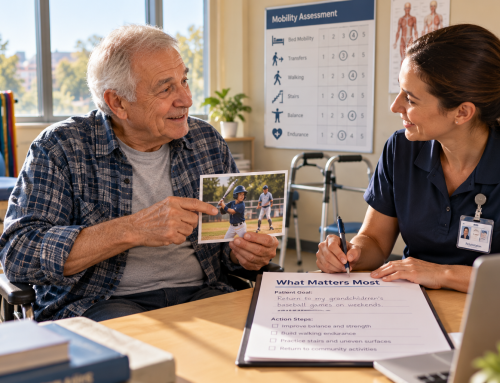
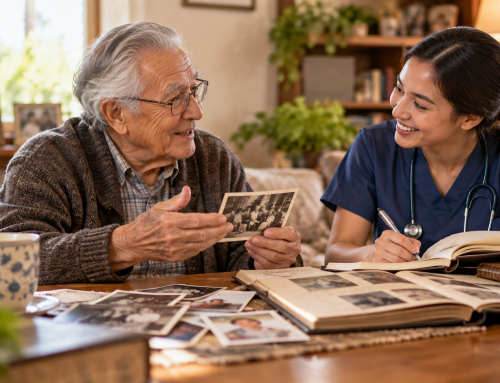
Tellegacy works at the intersection of health, social connection, aging, and education by creating structured intergenerational relationships that surface lived experience as legitimate health data. Through guided conversations and legacy-based storytelling, older adults and students engage across disciplines, cultures, and generations.
These interactions illuminate how social conditions affect health decisions, confidence, adherence, and outcomes over a lifetime. Students do not just learn about SDOH—they encounter them through human stories connected to real bodies, real organs, and real lives. This complements clinical education while reinforcing collaboration, empathy, and systems thinking.
Why This Work Starts With Conversation
Re-humanizing healthcare does not begin with another policy document alone. It begins with conversation—across departments, professions, generations, and communities. When health is understood as something co-created socially, responsibility becomes shared. Everyone becomes a collaborator in one another’s wellbeing.
Medical schools, healthcare systems, educators, and community partners all have roles to play. Embedding SDOH across curricula, strengthening interprofessional structures, and grounding education in lived experience are not optional improvements. They are necessary adaptations to the realities clinicians already face.
Next Steps: How to Get Involved
If you are part of a medical school, healthcare system, academic program, or community organization interested in advancing human-centered, socially grounded health education, there are several ways to engage:
- Integrate intergenerational and community-based learning into training programs
- Partner with Tellegacy to support curriculum enrichment and experiential learning
- Invite Dr. Jeremy Holloway to speak, facilitate workshops, or consult on program design
- Collaborate on research, evaluation, or pilot initiatives that connect SDOH to biomedical education
To start the conversation or explore collaboration, reach out directly at:
social@tellegacy.com
Health has always been social. Our systems are simply catching up.
Health has always been shaped by relationships, environments, and systems. Medical education that reflects this reality prepares clinicians not just to treat disease, but to support health as it is actually lived.
References
Braveman, P., & Gottlieb, L. (2014). The social determinants of health: It’s time to consider the causes of the causes. Public Health Reports, 129(Suppl 2), 19–31. https://doi.org/10.1177/00333549141291S206
Marmot, M., Friel, S., Bell, R., Houweling, T. A. J., & Taylor, S. (2008). Closing the gap in a generation: Health equity through action on the social determinants of health. The Lancet, 372(9650), 1661–1669. https://doi.org/10.1016/S0140-6736(08)61690-6
National Academies of Sciences, Engineering, and Medicine. (2016). A framework for educating health professionals to address the social determinants of health. The National Academies Press. https://doi.org/10.17226/21923
World Health Organization. (2010). A conceptual framework for action on the social determinants of health. WHO Press.
Absolutely—here are three laser-focused, high-impact photo concepts crafted specifically for a Tellegacy blog on health as a social construct, medical education, and re-humanizing healthcare. Each concept balances aesthetic appeal, conceptual depth, and SEO usefulness, and can be handed directly to a photographer, designer, or stock-image curator.