Why meaning, purpose, and What Matters Most should guide our approach to healthy aging
By Tellegacy | November 2026
Imagine two conversations with an older adult.
In the first, a healthcare professional recommends walking for 30 minutes each day to improve cardiovascular health, mobility, and strength.
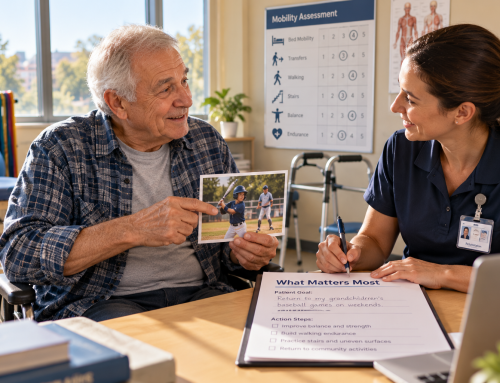
In the second, the professional begins by asking what the older adult most wants to continue doing in life. The older adult shares a desire to spend more time gardening, attending family gatherings, or volunteering at church. Together, they identify physical activities that can help make those experiences possible.
Both conversations encourage movement. Yet the second begins with something profoundly important: a reason to move.
This distinction deserves greater attention in how we promote healthy aging.
The Science of Physical Activity Is Clear. But What About Purpose?
Decades of research have established the benefits of physical activity for older adults. Regular movement supports cardiovascular health, muscle strength, balance, cognitive functioning, and independence. The World Health Organization (2020) recommends regular aerobic activity, muscle-strengthening exercises, and activities that improve balance and functional capacity.
These recommendations provide an essential foundation for healthy aging.
Across healthcare systems, senior living communities, and community-based wellness initiatives, physical activity frequently serves as a central measure of engagement and progress. Programs encourage walking, exercise classes, resistance training, and recreational participation.
An important question deserves equal consideration:
Are we helping older adults discover meaningful reasons to participate, or are we assuming participation itself will create meaning?
The distinction matters because physical activity and a sense of purpose are closely related, yet their relationship may operate differently than conventional program design assumes.
What the Research Reveals: Purpose May Come First
A particularly compelling study by Zhang and Chen (2021), published in the Journal of Aging and Health, examined longitudinal data from 4,591 older adults participating in the Health and Retirement Study.
Researchers investigated whether physical activity predicted a stronger sense of purpose over time, whether purpose predicted future physical activity, or whether the relationship operated in both directions.
Their findings were striking.
Older adults with a stronger sense of purpose were more likely to engage in vigorous-, moderate-, and light-intensity physical activity years later. However, physical activity did not significantly predict subsequent increases in purpose within that study.
The evidence suggested that purpose was more likely to precede physical activity than the reverse.
A 2026 investigation by Sutin and colleagues extended this research using accelerometers rather than relying exclusively on self-reported activity. Among 747 older adults with an average age of approximately 79, higher purpose predicted greater objectively measured physical activity one and two years later. Participants were also more active during assessment periods when their reported purpose was higher than their personal average.
The study did not establish that purpose slowed the overall rate of physical activity decline across three years. Nevertheless, its prospective findings reinforce the importance of purpose as a potential contributor to everyday movement.
Other longitudinal research has identified a reciprocal relationship in which physical activity can also strengthen purpose (Yemiscigil & Vlaev, 2021).
Together, these findings suggest a valuable opportunity: Begin with purpose, encourage personally meaningful activity, and allow the two to reinforce one another.
This represents an important shift in how we think about healthy aging interventions.
Meaning Is Personal. So Should Be the Activity.
Purpose cannot be reduced to a universal checklist.
A systematic review of 44 studies by AshaRani and colleagues (2022) found that purpose in later life encompasses meaningful goals, inner strength, social relationships, spirituality, well-being, and the experience of mattering to others.
For one older adult, purpose might involve participating in a faith community. For another, it could mean caring for a garden, preparing a traditional family meal, mentoring a younger person, or maintaining relationships with longtime friends.
These experiences reflect deeply individual values.
Recent research reinforces the importance of listening to these priorities.
In a 2025 study published in JAMA Network Open, Schiltz and colleagues examined responses from 388,046 older adults who were asked what mattered most to them during ambulatory healthcare visits.
Nearly 49% identified social activities and inclusiveness as their leading priority, compared with approximately 21% who identified health itself.
The findings reveal something essential: Many older adults value health because of what it allows them to experience, contribute, and enjoy.
As Tinetti and Nettles (2025) emphasized in their accompanying commentary, understanding what matters becomes especially valuable when personal priorities are translated into realistic, actionable goals.
This is precisely where meaningful conversations can transform approaches to wellness.
From Meaningful Goals to Meaningful Movement
Consider an older adult who identifies preparing Sunday dinner for family as an important source of meaning.
A conventional wellness plan might recommend strengthening exercises, improved nutrition, and regular walking.
A purpose-centered plan can connect these same recommendations to the older adult’s personal goal.
Strengthening exercises may help the individual stand comfortably while preparing meals. Walking may support shopping for ingredients or visiting family members. Meal preparation can create opportunities for nourishing food, cultural continuity, and social connection.
The physical health recommendations remain grounded in established evidence. Their personal relevance becomes clearer.
This connection between personal motivation and participation deserves attention.
A 2024 systematic review by Kilgour and colleagues examined 37 studies involving 26,961 adults aged 70 and older. The researchers identified social interaction, personal benefits, and support from family and friends among important motivators for physical activity.
Similarly, Sutin and colleagues (2024), examining data from 18,825 older adults, found that a greater sense of purpose was associated with a lower risk of developing slow walking speed over time.
These findings point toward a compelling possibility: Helping older adults connect health-promoting activities with personally meaningful goals may improve the motivation, relevance, and consistency of their participation.
Regular, appropriately designed physical activity provides the physiological stimulus for maintaining or improving strength and mobility. Adequate nutrition and individualized clinical guidance remain essential. A sense of purpose can provide a meaningful reason to engage in these health-promoting behaviors.
The goal becomes meaningful participation that supports measurable health improvements.
The Tellegacy Approach: Discover What Matters, Then Build From There
At Tellegacy, this philosophy guides our approach to intergenerational connection and healthy aging.
Our program brings trained university students together with older adults through structured, one-on-one conversations designed to cultivate meaningful relationships, recognize personal experiences, and encourage purposeful engagement.
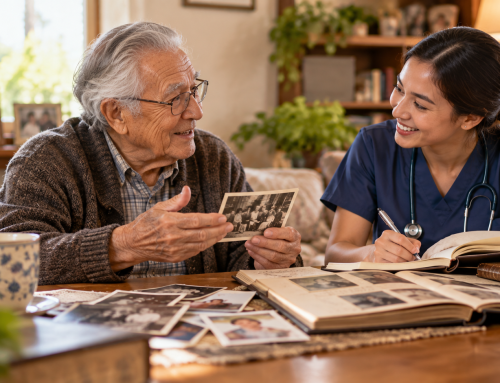
Through attentive listening, guided reminiscence, reflection, and person-centered goal-setting, older adults are invited to explore their life experiences, identify what they value, and consider activities that support their aspirations.
These conversations recognize that older adults bring a lifetime of knowledge, relationships, accomplishments, and wisdom to every interaction.
Their stories provide opportunities to identify strengths, reconnect with meaningful roles, and recognize possibilities for continued growth.
Tellegacy’s published feasibility study, conducted with 11 older adults, reported favorable changes in measures of loneliness, life satisfaction, and depressive symptoms, alongside strong participant retention and acceptability (Holloway et al., 2023). These preliminary findings provide a foundation for continued rigorous evaluation.
The program’s philosophy also aligns with the Age-Friendly Health Systems 4Ms framework, particularly What Matters, which calls for healthcare to reflect each older adult’s individual goals and preferences (Institute for Healthcare Improvement, 2022).
Tellegacy translates this principle into repeated, meaningful human interactions.
An older adult who rediscovers an interest in gardening might identify achievable movement goals that support returning to that activity. Someone who values mentoring may become motivated to participate more consistently in community gatherings. Another individual may develop goals around preparing meals, visiting loved ones, or sustaining cherished traditions.
Each pathway begins with the older adult’s own priorities.
These person-centered goals can create opportunities for greater physical activity, nutritional engagement, social participation, and emotional well-being.
Our continued research will help determine the extent to which these connected experiences translate into measurable health outcomes.
Rethinking What Successful Aging Looks Like
Healthcare professionals, senior living leaders, community organizations, and policymakers have an opportunity to strengthen healthy aging initiatives by bringing meaning and purpose into the earliest conversations about activity.
We can continue measuring steps, exercise participation, physical function, and strength. Alongside these important indicators, we can ask whether older adults are becoming better able to participate in the experiences that matter most to them.
Consider the difference between asking an older adult, “How can we get you to exercise more?” and asking, “What would you love to be able to do more often?”
The second question invites a conversation about aspirations, relationships, values, and personal identity. From there, practical goals can emerge that connect physical activity to something personally rewarding.
An older adult who wants to walk independently to a grandchild’s graduation has a meaningful reason to work on mobility. Someone who hopes to return to gardening has a reason to strengthen their muscles. Another person who wants to prepare meals with family may find renewed motivation to maintain the strength and energy those activities require.
These are examples of health promotion anchored in the life the individual wants to live.
At Tellegacy, we believe the future of healthy aging should increasingly reflect this principle:
Discover what matters most. Build meaning and purpose around those priorities. Then support the activities that help older adults live them.
Because the most meaningful measure of healthy aging is the opportunity to continue living a life that matters to the person living it.
References
AshaRani, P. V., Lai, D., Koh, J., & Subramaniam, M. (2022). Purpose in life in older adults: A systematic review on conceptualization, measures, and determinants. International Journal of Environmental Research and Public Health, 19(10), 5860. https://doi.org/10.3390/ijerph19105860
Holloway, J., Sayeed, O., & Jurivich, D. (2023). Tellegacy: An intergenerational wellness and health promotion project to reduce social isolation and loneliness in older adults: A feasibility study. International Journal of Environmental Research and Public Health, 20(23), 7094. https://doi.org/10.3390/ijerph20237094
Institute for Healthcare Improvement. (2022). Age-friendly health systems: Guide to using the 4Ms in the care of older adults in hospitals and ambulatory care practices. https://forms.ihi.org/hubfs/IHIAgeFriendlyHealthSystems_GuidetoUsing4MsCare.pdf
Kilgour, A. H. M., Rutherford, M., Higson, J., Meredith, S. J., McNiff, J., Mitchell, S., Wijayendran, A., Lim, S. E. R., & Shenkin, S. D. (2024). Barriers and motivators to undertaking physical activity in adults over 70—A systematic review of the quantitative literature. Age and Ageing, 53(4), afae080. https://doi.org/10.1093/ageing/afae080
Schiltz, N. K., Ahmed, B., Aldossary, H. M., Armstrong, G. Q., Greenberg, S. A., Bender, A. E., Pohnert, A., & Dolansky, M. A. (2025). Patient-centered priorities for older adults in ambulatory care. JAMA Network Open, 8(10), e2535769. https://doi.org/10.1001/jamanetworkopen.2025.35769
Sutin, A. R., Cajuste, S., Stephan, Y., Luchetti, M., Kekäläinen, T., & Terracciano, A. (2024). Purpose in life and slow walking speed: Cross-sectional and longitudinal associations. GeroScience, 46(3), 3377–3386. https://doi.org/10.1007/s11357-024-01073-8
Sutin, A. R., Luchetti, M., Kekäläinen, T., Stephan, Y., & Terracciano, A. (2026). The longitudinal relation between purpose in life and accelerometer-measured physical activity. Mental Health and Physical Activity, 30, 100762. https://doi.org/10.1016/j.mhpa.2026.100762
Tinetti, M. E., & Nettles, B. S. (2025). What matters about what matters most. JAMA Network Open, 8(10), e2535775. https://doi.org/10.1001/jamanetworkopen.2025.35775
World Health Organization. (2020). WHO guidelines on physical activity and sedentary behaviour. https://www.ncbi.nlm.nih.gov/books/NBK566046/
Yemiscigil, A., & Vlaev, I. (2021). The bidirectional relationship between sense of purpose in life and physical activity: A longitudinal study. Journal of Behavioral Medicine, 44(5), 715–725. https://doi.org/10.1007/s10865-021-00220-2
Zhang, Z., & Chen, W. (2021). Longitudinal associations between physical activity and purpose in life among older adults: A cross-lagged panel analysis. Journal of Aging and Health, 33(10), 941–952. https://doi.org/10.1177/08982643211019508