An Invitation From Tellegacy to Healthcare Leaders, Educators, and Frontline Professionals
Every day, healthcare professionals make decisions that influence the health, safety, independence, and quality of life of older adults. These decisions frequently require specialized knowledge, effective communication, and practical skills that extend beyond traditional clinical training.
Consider an older adult who becomes suddenly confused during hospitalization. Does the care team have the practical skills to recognize possible delirium, distinguish it from dementia-related symptoms, and respond appropriately?
Consider a family caregiver preparing to bring a loved one home after hospitalization. Has someone demonstrated the care activities they will need to perform, assessed their understanding, and helped them prepare for potential complications?
Or consider an older adult who has the physical ability to participate in rehabilitation but struggles to engage consistently. Have healthcare professionals explored the person’s meaningful goals, relationships, and motivations?
These scenarios illustrate a question that deserves immediate attention:
What essential aging-care training do healthcare professionals need today that they have not yet received?
At Tellegacy, we are inviting healthcare systems, hospitals, senior living organizations, home health agencies, and other aging-services providers to help us answer this question.
We want to hear directly from the people delivering care about the training their teams urgently need. We have the capacity to develop practical, research-informed education, and we want that work to address the needs healthcare organizations identify as most important.
Why Essential Geriatric Training Cannot Wait
Preparing the healthcare workforce to support an aging population is an immediate healthcare priority.
The American Geriatrics Society (2025) has emphasized the need to expand geriatrics education across healthcare professions, recognizing that the availability of specialists trained in aging-related care is insufficient to meet the needs of older adults.
This challenge reaches across healthcare settings. Nurses, physicians, rehabilitation professionals, social workers, case managers, community health workers, nursing assistants, and home health professionals routinely support individuals with complex aging-related needs.
Each profession brings valuable expertise. However, effective care also requires shared knowledge about how aging influences cognition, mobility, communication, medication management, chronic illness, social relationships, and everyday functioning.
The importance of these skills becomes especially visible during transitions between healthcare settings.
According to Caregiving in the U.S. 2025, approximately 63 million Americans provide family caregiving. The report found that 55% of caregivers perform complex medical or nursing tasks, yet only 22% reported receiving training (AARP & National Alliance for Caregiving, 2025).
These findings point to an important opportunity for healthcare systems: strengthening how clinical teams prepare patients and caregivers for the responsibilities that continue after discharge.
When essential care skills are missing, the consequences can extend beyond individual interactions to affect patient safety, continuity of care, caregiver confidence, and the ability to maintain independence.
The Evidence: Practical Interventions Can Prevent Harm
Research demonstrates that evidence-based, coordinated care approaches can reduce important risks among hospitalized older adults.
A systematic review and meta-analysis by Hshieh et al. (2018) examined the Hospital Elder Life Program (HELP), a multicomponent approach designed to prevent delirium and functional decline in hospitalized older patients.
The analysis found that HELP-based interventions were associated with 53% lower odds of delirium. In three comparative studies examining falls, intervention patients also experienced 42% lower odds of falling.
These outcomes emerged from coordinated interventions addressing factors such as cognitive orientation, mobility, sleep, hydration, and sensory needs. They demonstrate the potential of comprehensive care practices supported by appropriately prepared teams.
The findings also encourage an important distinction: effective training must connect knowledge with practical implementation. Providing information alone does not establish that clinical outcomes will improve.
For healthcare organizations, the question is therefore how to ensure that professionals have the knowledge, demonstrated skills, interdisciplinary support, and clinical workflows necessary to apply effective practices consistently.
When we know that certain complications can be prevented or reduced through effective care practices, preparing healthcare professionals to implement those practices becomes essential.
Age-Friendly Healthcare Requires Skills That Can Be Applied Every Day
The Age-Friendly Health Systems initiative provides a valuable framework for identifying the clinical and communication skills needed to improve care for older adults.
The Institute for Healthcare Improvement (IHI, n.d.) emphasizes four evidence-based elements of high-quality care, known as the 4Ms: What Matters, Medication, Mentation, and Mobility.
These principles encourage healthcare professionals to align clinical decisions with patients’ priorities while addressing medication-related risks, cognitive health, and safe movement.
Their importance has also been reflected in federal quality reporting. The Centers for Medicare & Medicaid Services (CMS, 2024) adopted an Age Friendly Hospital structural measure within the Hospital Inpatient Quality Reporting Program, beginning with the 2025 reporting period.
However, translating these principles into daily practice requires more than familiarity with the framework.
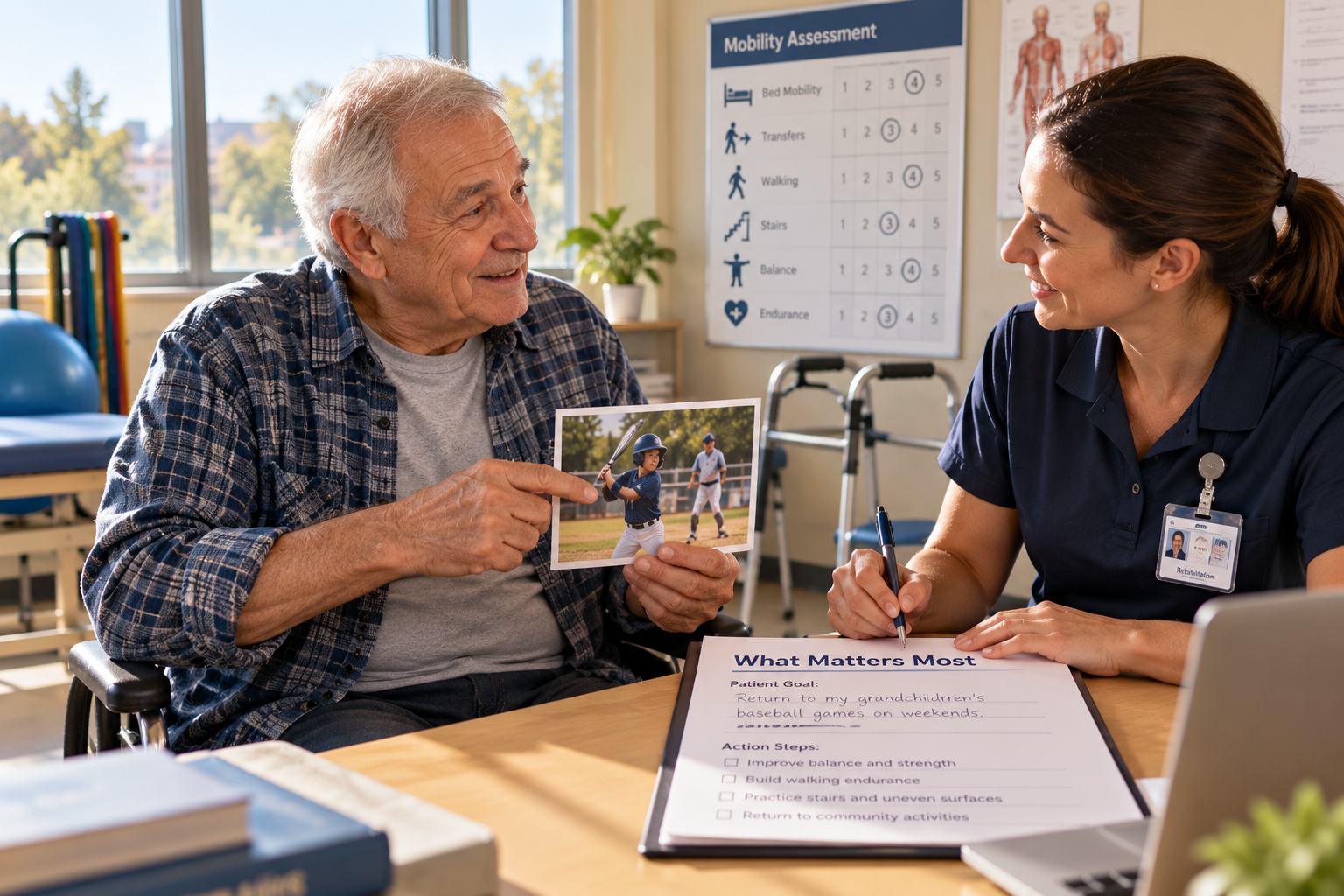
Healthcare workers need practical approaches for eliciting What Matters, recognizing changes in cognition, communicating with people living with dementia, supporting safe mobility, and coordinating medication-related concerns.
A healthcare professional may understand the importance of person-centered care while still needing structured practice in responding to a distressed older adult, navigating a difficult family conversation, or incorporating a patient’s personal goals into discharge planning.
These are opportunities for focused, practical education.
Which Training Gaps Are Affecting Your Organization Today?
Healthcare organizations are best positioned to identify the situations in which additional staff preparation would have the greatest immediate impact.
For some healthcare systems, a priority may involve recognizing delirium early and responding safely to distress or agitation among patients experiencing cognitive changes.
For others, the most pressing need may involve dementia communication, behavioral de-escalation, fall prevention, medication-related safety, or recognizing signs of elder abuse and neglect.
Care transitions may present another priority. Nurses, case managers, therapists, and discharge teams may benefit from additional practice in preparing family caregivers, using teach-back techniques, coordinating referrals, and recognizing barriers that affect recovery after hospitalization.
Other organizations may identify needs involving cross-cultural communication, sensory impairments, caregiver support, patient engagement, or applying the Age-Friendly 4Ms to everyday clinical decisions.
Social connection also deserves consideration.
The National Academies of Sciences, Engineering, and Medicine (2020) identified social isolation and loneliness as important health concerns among older adults and emphasized opportunities for healthcare systems to recognize and address these experiences.
The World Health Organization (2025) subsequently called for stronger action to address social disconnection as an important public health issue.
For healthcare teams, this creates practical questions about recognizing loneliness, understanding relationship quality, exploring What Matters, and connecting older adults with meaningful community support.
These examples represent potential training priorities. We want healthcare organizations to tell us which needs are most urgent in their own settings, including needs that may not appear in existing training catalogs.
From Healthcare Workforce Feedback to Practical Training
At Tellegacy, we believe effective training development begins with listening to the healthcare professionals and organizations who understand the needs of the people they serve.
Our experience developing structured intergenerational education has demonstrated the value of teaching practical communication, active listening, goal setting, and person-centered engagement.
In a published evaluation of the Tellegacy program, nursing students completed structured training before participating in guided conversations with older adults. Qualitative findings highlighted meaningful relationship building, improved communication experiences, and opportunities for intergenerational learning. Although the study did not establish statistically significant improvements in loneliness or life satisfaction, it provided valuable insights into curriculum implementation and participant experiences (Holloway et al., 2026).
Building on this experience, we are interested in working with healthcare organizations to develop training that addresses their identified needs.
Our approach centers on understanding the specific skills healthcare teams need, identifying evidence-based practices, working with appropriate clinical experts, and designing education that can be applied in everyday care.
Depending on organizational needs, these educational resources may include focused learning modules, case-based scenarios, experiential activities, communication exercises, practical skills checklists, and structured approaches for assessing learning.
Just as importantly, training should connect to meaningful organizational goals. These may include strengthening communication, improving caregiver preparation, supporting consistent use of age-friendly practices, improving staff confidence, or addressing specific patient safety priorities.
Our goal is to help healthcare organizations translate essential knowledge into practical skills that strengthen the care older adults receive.
Healthcare Leaders and Frontline Teams: We Need Your Feedback
We are asking healthcare organizations across the United States to identify the essential aging-care training their professionals need right now.
We especially welcome perspectives from Chief Nursing Officers, Chief Medical Officers, directors of nursing, healthcare educators, quality improvement leaders, rehabilitation directors, population health leaders, case managers, social workers, and frontline care professionals.
Your feedback will help identify the training priorities that deserve immediate attention.
We invite you to consider five questions:
- What is the single most important aging-care skill your healthcare team needs additional training in right now?
- What situations involving older adults are your staff encountering that existing training has not adequately prepared them to address?
- What patient safety, quality-of-care, communication, or care-transition outcomes would you most like stronger training to support?
- Which healthcare professionals or caregiving teams need this training most urgently?
- What type of practical training would best support your team in applying these skills consistently?
We are particularly interested in hearing about specific situations in which a practical training resource would make an immediate difference.
Perhaps your organization needs better tools for responding to dementia-related distress in acute care settings. Perhaps your discharge team needs a more reliable approach to preparing family caregivers. Perhaps your staff need additional training in recognizing social isolation, communicating across cultures, or connecting patients’ personal priorities with their care plans.
Your experience can help us identify which educational needs are most pressing and what effective training should accomplish.
Let’s Develop the Training Healthcare Systems Need
Tellegacy is actively seeking feedback from healthcare organizations that want to strengthen their workforce’s ability to provide high-quality, person-centered care for older adults.
We have the ability to develop practical educational resources and are especially interested in hearing about essential training needs for which organizations have been unable to find an adequate solution.
We want to understand what your team is experiencing, what training is missing, and how addressing that need would improve the experiences of older adults, caregivers, and healthcare professionals.
Your feedback is valuable whether you represent a large healthcare system, a rural hospital, a long-term care organization, a home health agency, or a frontline clinical team.
Please contact us and tell us what essential aging-care training your organization needs right now.
Email: social@tellegacy.com
Direct email: jeremy.holloway@tellegacy.com
Call Tellegacy: (701) 997-1363
Website: https://tellegacy.org
You are welcome to send a brief description of your most urgent training need or contact us to discuss the specific challenges your organization would like to address.
The Training Healthcare Needs Most May Be the Training You Identify Today
Every healthcare organization has valuable insight into the practical skills that help older adults remain safe, healthy, independent, and connected.
As our population ages, the ability to recognize changing needs, communicate effectively, coordinate care, and respond with evidence-based practices will become increasingly important across healthcare professions.
Meeting those needs begins with understanding where additional preparation would make the greatest difference.
At Tellegacy, we want to learn from healthcare systems and use that feedback to develop education that directly supports their priorities.
We believe the next essential advancement in aging-care training may begin with a healthcare professional identifying a skill their team urgently needs.
What training does your healthcare system need today to provide even better care for older adults tomorrow?
We would genuinely appreciate hearing from you.
References
AARP & National Alliance for Caregiving. (2025). Caregiving in the U.S. 2025. AARP. https://doi.org/10.26419/ppi.00373.001
American Geriatrics Society. (2025, July 3). American Geriatrics Society commends workforce training legislation that prioritizes the health care needs of older adults. https://www.americangeriatrics.org/media-center/news/american-geriatrics-society-commends-workforce-training-legislation-prioritizes
Centers for Medicare & Medicaid Services. (2024, August 1). FY 2025 Hospital Inpatient Prospective Payment System (IPPS) and Long-Term Care Hospital Prospective Payment System (LTCH PPS) final rule—CMS-1808-F. https://www.cms.gov/newsroom/fact-sheets/fy-2025-hospital-inpatient-prospective-payment-system-ipps-and-long-term-care-hospital-prospective-0
Holloway, J., Mustafa, Y., Acosta, R., Sayeed, O., Ringhiser, C., & Shaffer, L. (2026). Social care curriculum: Lessons learned from a community-based program to address intergenerational needs of older adults. Health & Social Care in the Community, 2026, Article 6758518. https://doi.org/10.1155/hsc/6758518
Hshieh, T. T., Yang, T., Gartaganis, S. L., Yue, J., & Inouye, S. K. (2018). Hospital Elder Life Program: Systematic review and meta-analysis of effectiveness. The American Journal of Geriatric Psychiatry, 26(10), 1015–1033. https://doi.org/10.1016/j.jagp.2018.06.007
Institute for Healthcare Improvement. (n.d.). Age-friendly health systems. https://www.ihi.org/partner/initiatives/age-friendly-health-systems
National Academies of Sciences, Engineering, and Medicine. (2020). Social isolation and loneliness in older adults: Opportunities for the health care system. The National Academies Press. https://doi.org/10.17226/25663
World Health Organization. (2025). From loneliness to social connection: Charting a path to healthier societies—Report of the WHO Commission on Social Connection. https://www.who.int/publications/i/item/9789240112360