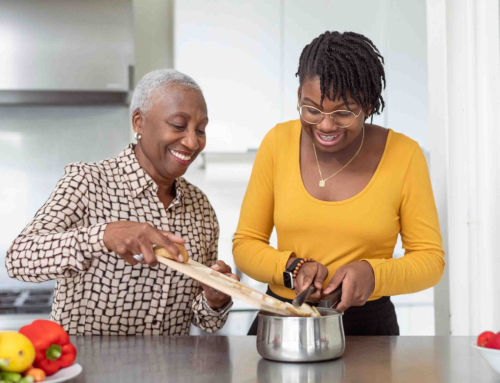
A reminder to restaurants, retailers, and service businesses that the human experience is still worth preserving.
By Tellegacy | November 2026
A simple request for a chair
Imagine a mother and her adult daughter arriving at a restaurant during the busy holiday season. They’re looking forward to sharing a meal, enjoying a conversation, and perhaps taking a break from Christmas shopping.
The restaurant is crowded. The waiting area is full, and every bench is occupied. After standing for several minutes, the mother begins looking for somewhere to sit.
Her daughter approaches a restaurant employee with a simple request: “Excuse me, is there a chair my mother could use while we’re waiting?”
The employee appears irritated. A reluctant expression, an impatient tone, and a dismissive response communicate that the request is an inconvenience.
The daughter notices. So does her mother.
Rather than continue waiting, they decide to leave.
Two customers have walked away from a business they had intended to support. No meal was ordered, and what could have been an enjoyable afternoon has become an unpleasant memory.
The situation raises a worthwhile question: When did offering someone a chair become an inconvenience rather than an expression of hospitality?
A restaurant may be exceptionally busy, and seating may genuinely be limited. Even then, a considerate response can make a difference. A staff member who acknowledges the need, looks for an available option, or offers a thoughtful alternative communicates something valuable: We’re glad you’re here.
Money doesn’t have an age. Neither does the desire to feel welcome.
As we enter the holiday season, perhaps it is time to give renewed attention to one of the oldest and most valuable traditions in customer service: the art of hospitality.
A shopping experience is more than a transaction
For many older adults, shopping is an experience they genuinely enjoy.
They may look forward to visiting a department store, browsing holiday displays, trying on clothing, selecting gifts, or simply spending an afternoon among other people.
For some, the outing is a meaningful part of their weekly routine. For others, it is an opportunity to share time with family or enjoy the atmosphere of the season.
Businesses should recognize the value of these experiences.
Consider the difference a few thoughtful accommodations can make. A comfortable bench in a shopping area, accessible seating near a fitting room, a clearly marked restroom, or a drinking fountain can help customers enjoy their visit.
The World Health Organization’s age-friendly communities framework recognizes the importance of accessible public spaces, adequate seating, and welcoming services in supporting older adults’ participation in community life (World Health Organization, 2007).
These are practical features that benefit customers across generations.
And perhaps the simplest form of hospitality requires no equipment at all.
“Good morning! Welcome in!”
“Are you finding everything you need?”
“Take your time. I’m happy to help.”
A sincere greeting can establish an atmosphere of warmth before a customer has even selected an item.
Technology has changed shopping. It shouldn’t change how we treat shoppers.
Retail technology has brought extraordinary convenience.
Customers can order through mobile applications, use self-checkout kiosks, scan QR codes, compare prices online, arrange curbside pickup, and receive automated shopping recommendations.
These innovations can make shopping faster and easier.
Yet somewhere in the enthusiasm for digital convenience, a troubling attitude can develop: the assumption that customers who prefer traditional shopping are somehow creating unnecessary work.
A shopper who asks a question rather than scanning a QR code may encounter an impatient response. Someone who prefers a staffed checkout may feel rushed. An older adult browsing a department store may sense that employees would rather manage online pickups than engage with customers on the sales floor.
The implied message can feel remarkably unwelcoming: You could have done this online. Why are you here?
There’s an important distinction worth making.
Choosing to shop in person does not mean someone lacks the ability to shop online.
AARP’s technology research found that smartphone ownership among Americans age 50 and older reached approximately 90% in 2025. Older adults routinely use technology for shopping, banking, communication, and other activities (Kakulla, 2026).
Many older shoppers know perfectly well how to order online.
They simply enjoy shopping in person.
And why shouldn’t they?
There is something wonderful about visiting a store, discovering an item, feeling the quality of a fabric, trying on a new outfit, or selecting a gift while imagining the person who will receive it.
The presence of a human being in a store, choosing something they may want to make part of their life—a new outfit, a meaningful gift, or something they have been looking forward to—is a beautiful part of the human experience.
That experience deserves to be cultivated.
Physical retail remains an important part of American commerce. According to the U.S. Census Bureau, e-commerce represented 17.9% of total U.S. retail sales in the third quarter of 2026, on a seasonally adjusted basis (U.S. Census Bureau, 2026).
Digital commerce is growing, but physical stores continue to serve an essential purpose.
As long as businesses invite people through their doors, welcoming those people must remain part of the brand.
The drive-through is still a place for hospitality
The same principle applies to drive-through restaurants, coffee shops, and other quick-service businesses.
During the holidays, lines grow longer. Employees are busy, orders arrive quickly, and maintaining efficiency becomes especially important.
Some customers place orders in advance through mobile applications. Others use loyalty programs, scan digital rewards, or pay electronically.
Wonderful.
Other customers prefer to drive up to the menu, consider their choices, place an order with an employee, and pay with cash or a credit card.
That should be wonderful, too.
A customer who takes a reasonable moment to select a meal should not feel uncomfortable simply because someone else might have ordered ahead.
An older adult who prefers speaking to an employee should receive the same welcoming tone as someone collecting a mobile order.
The responsibility of hospitality is to serve customers through the purchasing options a business makes available.
Technology should expand convenience rather than introduce an expectation that every customer must behave the same way.
Consider how much difference these words can make:
“Welcome! What can we get started for you today?”
“Of course, take a moment to look over the menu.”
“Thank you for stopping by. Have a wonderful holiday!”
A welcoming tone creates a positive experience even when the interaction lasts less than a minute.
Hospitality requires intentional leadership
The holiday rush brings genuine demands for frontline employees. Long lines, complicated transactions, staffing pressures, and competing responsibilities can make the work challenging.
For that reason, hospitality should be something organizations deliberately teach, reinforce, and support.
It belongs in employee onboarding, team meetings, supervisor coaching, and daily operating expectations.
The World Health Organization (2021) identifies ageism as a concern that can involve stereotypes, prejudice, and discrimination based on age. In customer service, one practical way to counter age-based assumptions is to treat each shopper as an individual with preferences worth respecting.
A customer should not be presumed unfamiliar with technology, incapable of making decisions, or less valuable because of age.
Businesses can strengthen their hospitality culture through a few intentional practices:
- Make comfort part of the customer experience. Provide accessible seating, clear pathways, convenient water access, and helpful directions where feasible.
- Preserve meaningful customer choice. Offer digital convenience while maintaining friendly assistance for customers who prefer traditional purchasing methods.
- Train for welcoming communication. Reinforce respectful greetings, attentive listening, thoughtful responses to requests, and a hospitable tone even during busy periods.
- Make hospitality a leadership priority. Equip employees with the staffing, preparation, and support needed to deliver consistent service, and use customer feedback to improve the experience.
These practices are practical investments in the way an organization welcomes the public.
Keep the human experience at the heart of the holidays
Holiday shopping has always been about more than purchasing goods.
It includes the excitement of selecting gifts, enjoying a family meal, browsing a favorite store, and sharing moments that may become cherished memories.
For older adults, these opportunities can be especially meaningful when they support independence, social participation, and continued engagement with the community.
A warm greeting, an available chair, a little understanding, or a pleasant conversation can help make an ordinary outing memorable for the right reasons.
At Tellegacy, our work brings generations together through meaningful conversations, shared experiences, and respect for the lives and stories of older adults.
Our commitment to re-humanizing healthcare reflects a principle that extends naturally into restaurants, retail stores, shopping centers, and community spaces: People deserve to feel valued wherever they are welcomed as guests, customers, or participants.
This holiday season, businesses have an opportunity to strengthen the art of hospitality through intentional, everyday acts of service.
Welcome the customer who prefers to browse.
Make room for the older adult who needs to rest.
Respect the person who chooses to order at the counter.
And remember that the person standing before us is more than the next transaction.
The art of hospitality is a human art. It deserves to be practiced, strengthened, and passed from one generation to the next.
Tellegacy is an intergenerational initiative for healthy aging, connecting older adults with students and community partners through meaningful conversations, education, and shared experiences.
Re-Humanizing Healthcare, One Conversation at a Time.
References
Kakulla, B. (2026, July 20). Tech use and adoption keeps surging among older adults. AARP Research. https://www.aarp.org/pri/topics/technology/internet-media-devices/2026-technology-trends-older-adults/
U.S. Census Bureau. (2026, November 19). Quarterly retail e-commerce sales: Third quarter 2026. https://www.census.gov/retail/eCommerce.html
World Health Organization. (2007). Global age-friendly cities: A guide. https://www.who.int/publications/i/item/9789241547307
World Health Organization. (2021). Global report on ageism. https://www.who.int/publications/i/item/9789240016866