The Social Determinants of Health Toolkit officially launched on Grandparents Day, September 13, 2026—and it is available now.
Some books are written to explain an issue.
This book was written to help people do something about it.
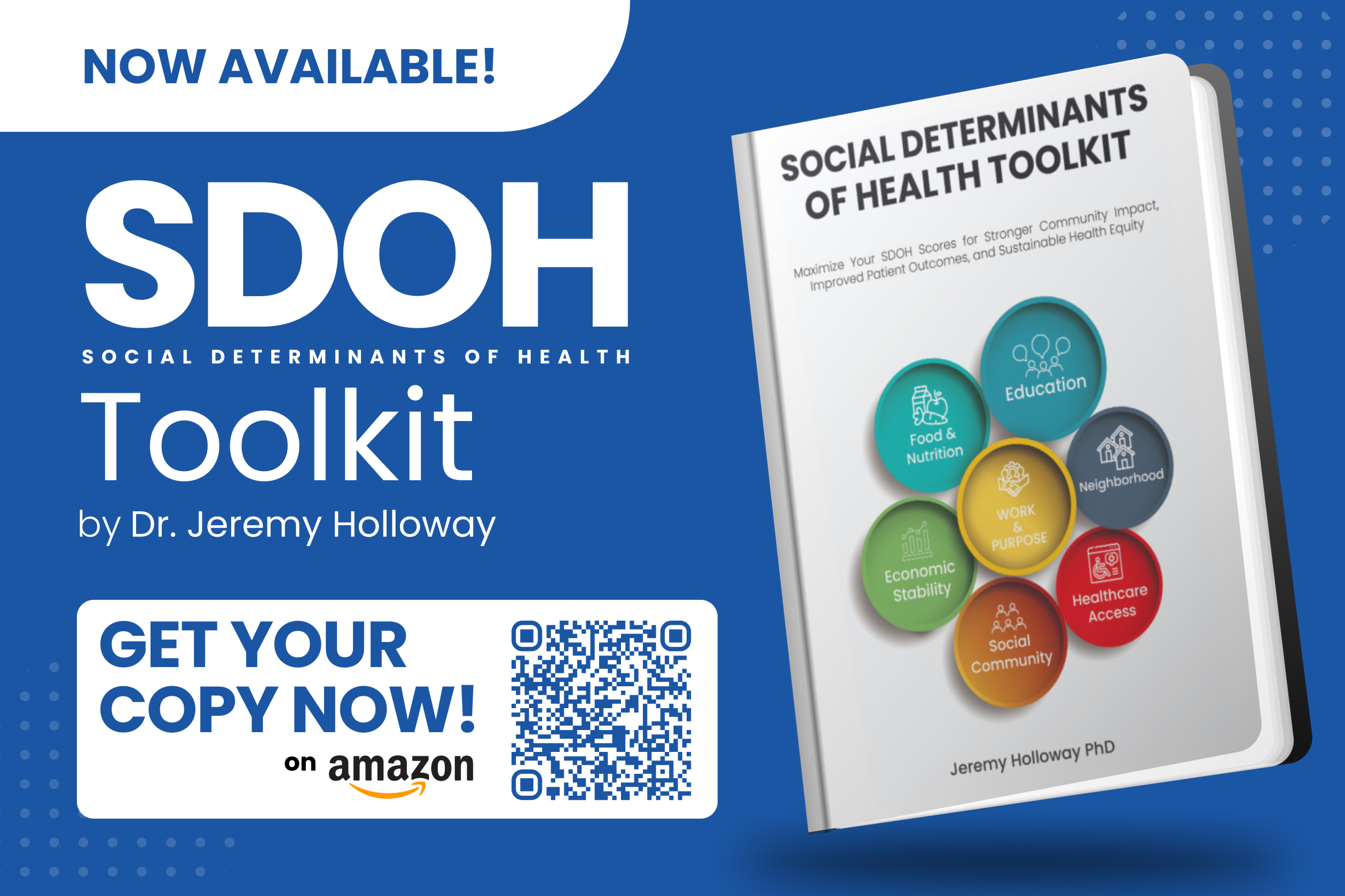
The Social Determinants of Health Toolkit: Maximize Your SDOH Scores for Stronger Community Impact, Improved Patient Outcomes, and Sustainable Health Equity brings Social Determinants of Health out of reports, presentations, and policy conversations and places practical tools directly into the hands of people who can make a difference.
Healthcare professionals. Social workers. Case managers. Caregivers. Public health leaders. Community organizations. Educators. Aging professionals. Policymakers. Students. Families.
This book is for you.
BUY THE BOOK NOW
Amazon — Kindle:
Buy the Kindle edition on Amazon
Amazon — Paperback:
Buy the paperback on Amazon
Amazon — Hardcover:
Buy the hardcover on Amazon
Official SDOH Toolkit Book Page:
Explore the SDOH Toolkit and bonus resources
Tellegacy:
Learn more through Tellegacy
Health Happens Long Before Someone Enters a Clinic
Where we live matters.
Whether we can afford nutritious food matters.
Transportation matters.
Education matters.
Income and employment matter.
The strength of our relationships and communities matters.
Whether people feel heard, respected, connected, and able to navigate the systems around them matters.
The U.S. Healthy People 2030 framework identifies five major SDOH domains: economic stability; education access and quality; health care access and quality; neighborhood and built environment; and social and community context. These conditions influence health, functioning, quality of life, and the opportunities people have to remain healthy throughout life.
The World Health Organization goes even further, noting that social determinants can exert an influence on health that outweighs genetics or access to healthcare itself.
That changes the conversation.
A prescription may matter tremendously. So may the patient’s ability to afford it.
A care plan may be clinically excellent. So may the patient’s transportation to the appointment.
Nutrition recommendations may be evidence-based. So is the reality of whether healthy food is affordable and available nearby.
And a person can receive excellent medical care while still navigating isolation, unstable housing, financial pressure, caregiving strain, limited resources, discrimination, or a community environment that makes good health harder to sustain.
Health has a context.
The Social Determinants of Health Toolkit was created to help readers understand that context—and respond to it.
Why Grandparents Day Was the Right Day to Launch
Launching this book on Grandparents Day was intentional.
Health exists across generations.
The environments we build today influence the lives of children, parents, grandparents, caregivers, and communities tomorrow. Knowledge passes across generations. So do opportunity, disadvantage, resilience, culture, relationships, resources, and wisdom.
My work has continually returned to one fundamental idea:
“You can’t treat the body if you ignore the story. SDOH invites both into the room.”
Understanding someone’s health means becoming curious about the world surrounding that person.
What resources are available?
What barriers exist?
Who is present in their life?
What matters to them?
What opportunities have been available to them?
What circumstances are making health easier—or harder—to achieve?
The answers change what meaningful support can look like.
What You Will Find Inside the SDOH Toolkit
This is a practical toolkit.
Readers move from understanding Social Determinants of Health to considering how SDOH can be assessed, measured, discussed, and incorporated into real settings.
The book provides frameworks, strategies, real-world tools, case examples, and actionable guidance related to strengthening community impact, improving outcomes, building collaborations, navigating policy environments, developing funding strategies, and integrating SDOH into healthcare and community work.
For Healthcare Professionals and Clinicians
The toolkit helps connect what happens during an encounter with the realities surrounding the individual outside the healthcare setting.
Readers can explore ways to:
- Recognize social factors influencing health and well-being.
- Incorporate SDOH thinking into person-centered care.
- Connect assessment with meaningful action.
- Better understand barriers affecting treatment, prevention, and follow-through.
- Strengthen conversations about what matters to the people being served.
For Social Workers, Case Managers, and Care Coordinators
This book speaks directly to professionals who regularly encounter the intersection between health and everyday life.
It provides practical ways to think through:
- Economic stability.
- Housing and neighborhood conditions.
- Transportation.
- Food access.
- Education.
- Healthcare access.
- Social connection.
- Community resources.
- Cross-sector referral and collaboration.
The goal is greater clarity about what can be identified, what can be measured, and what can be acted upon.
For Public Health and Community Leaders
SDOH work requires collaboration far beyond the walls of healthcare.
The toolkit explores approaches for strengthening partnerships, developing community strategies, measuring impact, communicating needs, and connecting SDOH priorities with funding and program development.
That makes it relevant to:
Public health departments. Community Action Agencies. Aging organizations. Nonprofits. Universities. Community-based organizations. Health systems. Senior-serving organizations. Local leaders.
For Policymakers and Organizational Leaders
Good intentions need structure.
The book provides frameworks for thinking about how SDOH information can inform program design, community investment, policy decisions, funding proposals, partnerships, and impact reporting.
Healthy People 2030 itself emphasizes that improving SDOH requires participation across sectors including healthcare, education, transportation, housing, government, nonprofit organizations, and communities.
That work requires people who know how to connect the pieces.
For Caregivers, Families, Students, and Everyday People
SDOH belongs outside professional circles too.
Every family encounters these determinants.
Every neighborhood reflects them.
Every person lives within them.
The toolkit gives readers language for understanding the circumstances that influence their health, the health of people they care about, and the well-being of their communities.
That knowledge creates possibilities for action.
From Awareness to Action
Imagine an older adult who repeatedly misses healthcare appointments.
The easiest explanation may be: noncompliance.
Look deeper.
Perhaps the nearest family member lives three states away.
Perhaps driving is no longer possible.
Perhaps public transportation is limited.
Perhaps the appointment competes with the cost of groceries.
Perhaps navigating an online patient portal has become difficult.
Perhaps loneliness is a topic the older adult desires to address so that it doesn’t narrow the person’s world.
Suddenly, the problem looks different.
And when the problem looks different, the possible solutions change too.
That is the power of an SDOH lens.
It encourages us to understand the circumstances surrounding an outcome before deciding how to respond to it.
This Book Belongs in More Than a Bookshelf
Use it.
Write in it.
Discuss it with a team.
Bring it into a classroom.
Use it in workforce development.
Reference it while designing a community initiative.
Give it to a student entering healthcare.
Share it with a caregiver.
Bring its questions into a staff meeting.
Use its frameworks while thinking through a grant or community partnership.
Give a copy to someone whose work affects the health and well-being of other people.
Knowledge creates its greatest value when it travels.
The Social Determinants of Health Toolkit Is Available Now
Grandparents Day marked the launch.
Now the work begins.
If you work in healthcare, aging, public health, social services, education, community development, caregiving, policy, research, or any setting where people’s circumstances influence their well-being, this book was created with your work in mind.
GET YOUR COPY
Buy the Kindle edition on Amazon
Visit the official SDOH Toolkit Book page
The official book page also provides access to the free SDOH Workbook and exclusive updates.
For Organizations, Speaking Engagements, Partnerships, Media, or Bulk-Order Inquiries
Email: social@tellegacy.com
If your organization wants to bring the Social Determinants of Health Toolkit into a classroom, healthcare team, community organization, conference, workforce training program, or professional development initiative, reach out.
One Final Thought
Health becomes more understandable when we see the whole person.
And the whole person has a home.
A family.
A neighborhood.
A history.
Relationships.
Responsibilities.
Resources.
Barriers.
Strengths.
A community.
A story.
The Social Determinants of Health Toolkit gives us practical ways to bring those realities into how we understand health—and into what we choose to do next.
The book is here.
Get your copy. Share it with someone whose work touches people’s lives. And put the toolkit to work.