How relationships across generations can strengthen older adult well being, prepare a more age friendly workforce, and extend the impact of preventive care
Something important is happening in healthcare.
Social connection is increasingly being treated as part of the infrastructure of health. The Centers for Disease Control and Prevention recognizes strong social connection as protective of physical and mental health, while social isolation and loneliness are associated with increased risks for heart disease, stroke, dementia, depression, anxiety, and earlier death (Centers for Disease Control and Prevention [CDC], 2024).
In 2026, the movement became even more visible. The CDC launched its Community & Connection data channel on May 27, providing national and state level information on loneliness, social support, and social activity. The National Institute on Aging updated its Social Isolation and Loneliness Outreach Toolkit in June, providing resources for older adults, caregivers, healthcare professionals, and communities (CDC, 2026; National Institute on Aging [NIA], 2026).
At the same time, age friendly healthcare continues to expand dramatically. As of August 2026, more than 6,900 healthcare organizations had received recognition through the Institute for Healthcare Improvement’s Age Friendly Health Systems movement, with more than 9.9 million older adults reached through care based on the 4Ms: What Matters, Medication, Mentation, and Mobility (Institute for Healthcare Improvement [IHI], 2026).
These developments point toward a larger opportunity.
If social connection can improve health, what happens when we become more intentional about who is connecting with whom, what happens during those interactions, and what each generation gains from the relationship?
This is where intergenerational connection becomes especially powerful.
One Relationship Can Produce Multiple Outcomes
Traditional approaches to social connection often focus on a single outcome: helping a person feel less alone.
That outcome matters enormously. Yet intergenerational connection creates the possibility of something much larger because the relationship can simultaneously affect the older adult, the younger participant, and the systems surrounding both of them.
A 2026 systematic review by Savino et al. examined 26 intergenerational interventions involving younger and older adults. The researchers found improvements across areas including mental health, social inclusion, community cohesion, and ageism, with 77% of the included studies reporting positive outcomes for both generations (Savino et al., 2026).
That finding changes how we can think about social connection.
Instead of asking whether a program creates meaningful social contact for an older adult, we can ask a bigger question:
How many positive outcomes can one well designed relationship produce?
The multiplier is practical. An older adult gains meaningful human connection. A student or younger participant develops experience communicating across generations. A university gains experiential education. A healthcare organization gains additional capacity for person centered engagement. Communities gain stronger connections between generations.
One relationship becomes capable of creating value in several directions at once.
The First Impact: Helping Older Adults Feel Seen, Heard, and Connected
The most immediate benefit remains deeply human.
Older adults experiencing social isolation need opportunities for relationships that provide belonging, purpose, recognition, and meaningful interaction. NIA reports that approximately one in four community dwelling adults age 65 and older are socially isolated, while CDC increasingly identifies social connection as an important contributor to healthy aging (NIA, 2026; CDC, 2024).
Yet meaningful connection involves more than increasing the number of conversations someone has.
Quality matters.
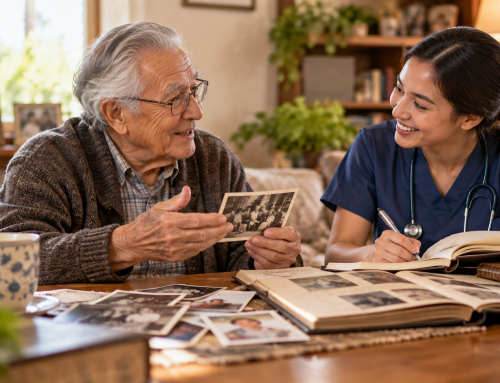
A conversation can create an opportunity for an older adult to tell a story that has not been told in years. It can uncover a goal that has become buried beneath medical appointments and daily routines. It can reveal why someone stopped participating in an activity, what relationship they miss, what accomplishment they remain proud of, or what they still hope to experience.
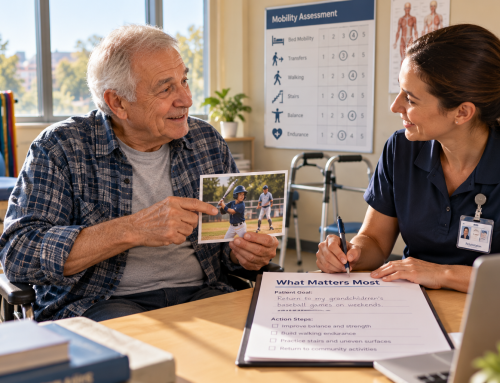
This is also where social connection intersects naturally with What Matters, one of the central elements of the 4Ms framework.
IHI describes What Matters as understanding the goals and preferences that should guide an older adult’s care. The framework encourages health systems to connect decisions about medication, mentation, and mobility to the life the person actually wants to live (IHI, 2026).
A meaningful relationship provides the time and trust through which What Matters can become visible.
And once it becomes visible, healthcare can respond more intelligently.
The Second Impact: The Younger Generation Changes Too
This may be one of the most important opportunities hidden inside social connection.
When a younger person spends sustained, meaningful time with an older adult, the older adult is providing something in return: experience.
Healthcare students can study aging in classrooms. They can learn terminology, clinical procedures, disease processes, care planning, and gerontological theory.
Human interaction adds another level of education.
It teaches how to listen when a person’s priorities differ from our assumptions. It teaches patience, curiosity, communication, dignity, empathy, and how much information can emerge when someone is given enough time to tell their story.
Recent experimental evidence is increasingly supporting this idea.
Cao et al. (2026) randomized 126 nursing students to an intergroup contact training intervention or regular training. Students participating in the structured contact program demonstrated lower aging stereotypes and intergroup anxiety and greater willingness to engage in geriatric care following the intervention.
Another 2026 randomized trial involving 120 nursing students found that an eight week structured older adult care education program significantly improved positive attitudes toward older adults compared with the control condition (Yilmaz & Çalışkan, 2026).
The implications reach beyond reducing ageism.
Imagine thousands of future nurses, physicians, social workers, public health professionals, therapists, case managers, community health workers, and healthcare administrators entering their careers having already spent meaningful time listening to older adults.
Their future interactions may change.
The questions they ask may change.
Their assumptions may change.
And the care they eventually provide may change.
The Older Adult Can Become Part of Healthcare Education
This creates an important shift in perspective.
Older adults can contribute directly to the development of the future healthcare workforce.
Their experiences can become part of the curriculum.
A conversation about a career can teach purpose. A story about losing a spouse can teach grief and social transition. A discussion about medications can reveal how healthcare instructions are experienced outside the clinic. A story about transportation can illuminate a social determinant of health more vividly than a slide presentation ever could.
An older adult describing what truly matters in life can teach person centered care at its source.
This creates reciprocity.
The younger participant brings attention, curiosity, energy, and connection. The older adult brings history, knowledge, perspective, and lived experience.
Both contribute.
Both receive.
And the relationship itself becomes an intervention.
Tellegacy Has Been Working This Model
This reciprocal structure has been central to Tellegacy from its beginning.
In the initial Tellegacy feasibility study, university students received training in listening, mindfulness, and goal setting and were paired with older adults for structured conversations. Oral reminiscence was incorporated into the experience, and participants’ stories ultimately became Legacy Books (Holloway et al., 2023).
Among the 11 older adults participating in that feasibility study, measures showed favorable improvements in loneliness, life satisfaction, and depressive symptoms. The study also identified self reported benefits among the student Legacy Builders, providing an early signal that the intervention could create value on both sides of the relationship (Holloway et al., 2023).
The continuing evidence surrounding intergenerational programming makes the larger possibility increasingly compelling.
Perhaps the future of social connection programming involves designing intentionally for reciprocal outcomes from the beginning.
Instead of measuring only what changes for the older adult, we can measure what changes for both participants.
Loneliness.
Life satisfaction.
Purpose.
Communication skills.
Confidence.
Age related attitudes.
Understanding of What Matters.
Ability to recognize social barriers.
Willingness to work with older adults.
Goal attainment.
These outcomes begin to tell a much richer story about the value created by one relationship.
The Third Impact: Healthcare Gains Capacity
There is another beneficiary in an intergenerational model: the healthcare and community systems surrounding the relationship.
A 2026 article by Zorotovich and Reeder makes an unusually direct argument. The authors frame social connections as healthcare and propose that managed care organizations, including Medicare Advantage and Medicaid Managed Care plans, could integrate intergenerational programs in which younger people connect regularly with older adults experiencing social isolation (Zorotovich & Reeder, 2026).
This matters because healthcare organizations are confronting two simultaneous realities.
The population of older adults is growing, while healthcare professionals have limited time to address the social and personal circumstances influencing health.
Intergenerational models potentially create additional human capacity.
Universities already contain large populations of students who need experiential education. Communities already contain older adults with enormous knowledge and life experience. Healthcare organizations increasingly need approaches that address social determinants of health, What Matters, social isolation, prevention, and person centered care.
Connecting these systems intentionally could create value for all three.
University + community + healthcare + structured intergenerational relationship.
That equation deserves serious attention.
Social Connection Can Become Preventive Infrastructure
The opportunity becomes even more interesting when social connection is viewed through prevention.
CDC reports that stronger social bonds are associated with longer and healthier lives and that social connection can support stress management, physical activity, healthy behaviors, sleep, and emotional health (CDC, 2024).
For older adults, a trusted relationship may also create opportunities for earlier recognition.
Someone mentions that they have stopped walking because they are afraid of falling.
Someone reveals that transportation has become difficult.
Someone mentions skipping meals.
Someone describes becoming confused about medications.
Someone acknowledges that they have lost interest in activities they once enjoyed.
Someone talks about a goal they still want to accomplish.
These conversations contain information.
When people feel heard, social connection can become a pathway through which emerging needs, strengths, goals, and barriers become visible earlier.
This is where social health begins intersecting with preventive healthcare.
Imagine the Multiplier at Scale
Consider what could happen if intergenerational connection were incorporated intentionally across health plans, universities, senior living communities, community organizations, councils on aging, health systems, and public health programs.
One thousand older adults receiving meaningful connection could also mean one thousand younger people receiving meaningful education.
Ten thousand structured conversations could simultaneously become ten thousand opportunities to understand What Matters.
A university partnership addressing social isolation could also become a workforce development initiative.
A healthcare intervention could simultaneously become an ageism reduction strategy.
A social connection program could become a source of experiential learning, community capacity, early identification, health promotion, storytelling, and measurable outcomes.
This is the multiplier.
The value of the interaction extends beyond the interaction itself.
From More Contact to Better Designed Connection
Scale alone will not create these results. The quality and structure of the interaction matter.
The emerging literature suggests that intentional programming produces stronger opportunities for meaningful outcomes. Intergenerational programs reviewed by Savino et al. (2026) included education, reminiscence, meaningful activities, physical activity, technology, and community engagement, showing that connection can be designed around purposeful experiences.
This is an important distinction for healthcare.
A phone call can provide companionship.
A structured relationship can additionally teach active listening, uncover goals, support reflection, identify barriers, encourage meaningful action, create accountability, and generate information that can be measured.
The future opportunity is therefore larger than increasing the frequency of social contact.
It is creating higher value connection.
What Matters May Begin With Who Asks
The extraordinary growth of the Age Friendly Health Systems movement demonstrates that healthcare is increasingly prepared to organize care around what matters to older adults.
More than 9.9 million older adults have already been reached through 4Ms based care (IHI, 2026).
Now imagine complementing that infrastructure with intergenerational relationships capable of helping older adults explore and articulate what matters.
A student can ask:
What are you most proud of?
What gives your life meaning today?
What would you like to be able to continue doing?
What has become harder lately?
Who are the people who matter most to you?
What would make the next year meaningful?
Those questions create conversation.
Conversation creates understanding.
Understanding creates the possibility of better action.
And action connected to what matters is where person centered healthcare becomes tangible.
The Next Generation of Social Connection
We have spent years building awareness around loneliness and social isolation. That work has mattered, and national institutions are now creating stronger data, tools, frameworks, and healthcare strategies around social connection.
The next opportunity is to increase the value generated by every connection we create.
Intergenerational models offer an especially promising pathway because the benefits can travel in multiple directions. Older adults can experience connection, purpose, and an opportunity to be heard. Younger people can develop communication skills, aging knowledge, confidence, and more informed perceptions of older adulthood. Healthcare and community organizations can gain new capacity for age friendly, preventive, and person centered engagement.
One relationship can touch several outcomes.
One conversation can influence two generations.
And one thoughtfully designed program can connect healthcare, education, community, and prevention in ways that each sector may struggle to accomplish alone.
The future of social connection may therefore depend on something deeper than helping people connect more often.
It may depend on designing relationships that allow both generations to become healthier, more capable, and more connected because they met.
That is where social connection begins to look like healthcare.
And intergenerational connection begins to look like a multiplier.
References
Cao, M., Li, F., Yao, Q., Zhou, N., Xiang, T., & Wu, H. (2026). Effects of inter-group contact training on aging-related stereotypes among undergraduate nursing students: A randomized controlled trial. Gerontology & Geriatrics Education, 47(3), 362–377. doi:10.1080/02701960.2025.2551960.
Centers for Disease Control and Prevention. (2024). Health effects of social isolation and loneliness. National Center for Chronic Disease Prevention and Health Promotion.
Centers for Disease Control and Prevention. (2024). Social connection. National Center for Chronic Disease Prevention and Health Promotion.
Centers for Disease Control and Prevention. (2026). Community & connection. Mental Health Data Channel.
Holloway, J., Sayeed, O., & Jurivich, D. (2023). Tellegacy: An intergenerational wellness and health promotion project to reduce social isolation and loneliness in older adults: A feasibility study. International Journal of Environmental Research and Public Health, 20(23), 7094. doi:10.3390/ijerph20237094.
Institute for Healthcare Improvement. (2026). Age Friendly Health Systems recognition.
National Institute on Aging. (2026). Social isolation and loneliness outreach toolkit. National Institutes of Health.
Savino, M., De Luca, L., Nocentini, A., & Menesini, E. (2026). Intergenerational interventions and their impact on active aging: A systematic review. International Psychogeriatrics, 38(2), 100142. doi:10.1016/j.inpsyc.2025.100142.
Yilmaz, Ü., & Çalışkan, B. B. (2026). The effect of structured older adult care training on nursing students’ attitudes toward ageism: A randomized controlled trial. Gerontology & Geriatrics Education, 47(3), 486–507. doi:10.1080/02701960.2026.2672041.
Zorotovich, J., & Reeder, H. (2026). Social connections as healthcare: Leveraging intergenerational relationships and managed care plans to address the loneliness epidemic. Journal of Gerontological Social Work. Advance online publication. doi:10.1080/01634372.2026.2650570.